CONSTRUCTION
Building New Construction for Profit in 2026: Markets, Margins, and Financing
Spec Building Is Back, But Only in the Right Markets
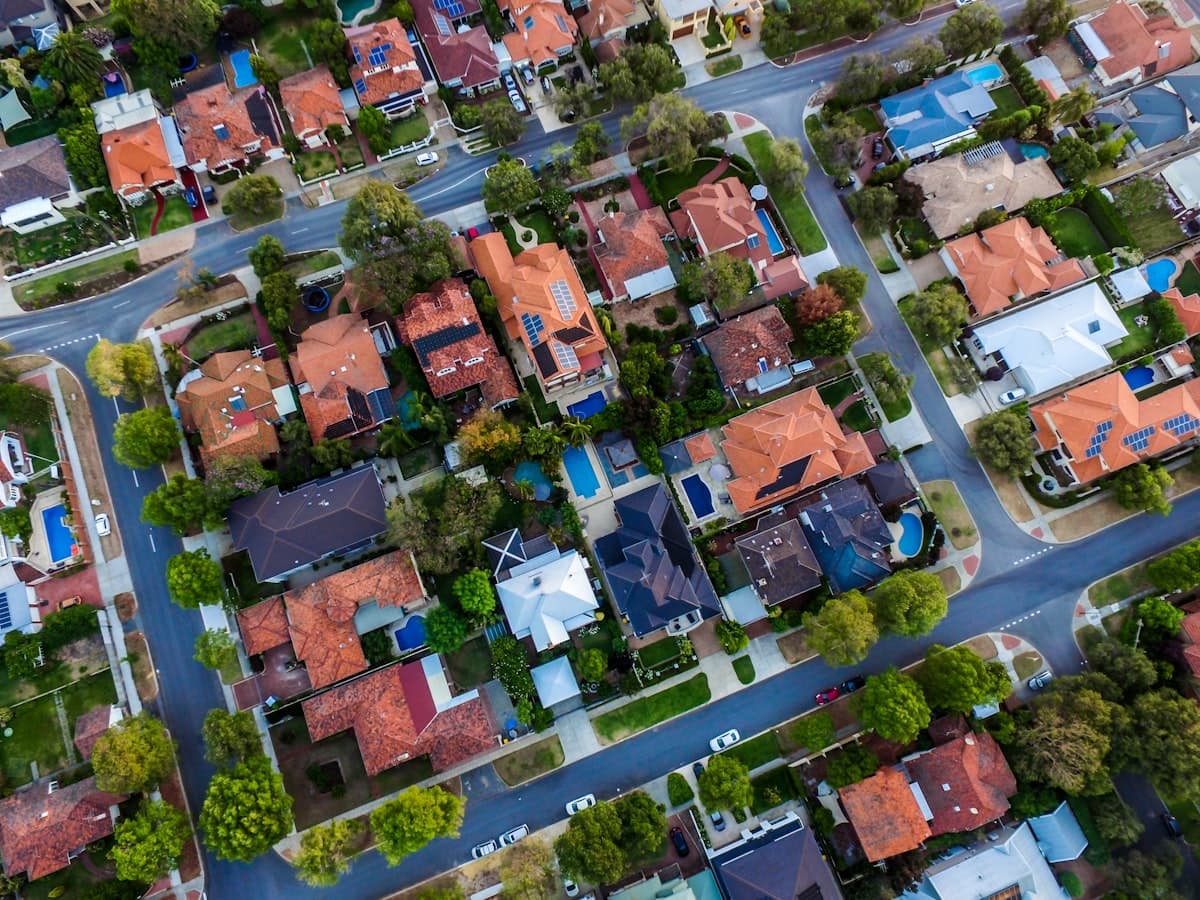
There is a segment of the residential real estate market where demand is high, inventory is critically low, and the economics of building a new home from scratch still produce strong returns. In 2026, that segment is concentrated in a handful of Sun Belt and Southeast markets where population growth is outpacing new housing supply by a wide margin.
Spec building, which means constructing a home without a buyer under contract, is not a strategy that works everywhere. In high-cost coastal markets, lot prices alone can eat your entire margin. In slow-growth rural areas, there may not be enough buyer demand to sell the finished product within a reasonable timeline. But in markets where you can acquire a buildable lot for under $80K, construct a quality home for $140 to $170 per square foot, and sell the finished product for $380K to $450K, the math works. And it works well.
This post breaks down exactly where those markets are, what the full budget looks like for a ground-up spec build, how construction loans fund these projects through a draw schedule, and the complete P&L on a real example deal. If you are an investor considering new construction as a profit strategy, this is the framework you need.
Why New Construction Makes Sense for Investors in 2026
The housing shortage in the United States is not a talking point. It is a measurable deficit. The National Association of Realtors has estimated the country is short approximately 4 to 7 million housing units, depending on how you measure it. In fast-growing metros across Texas, Florida, the Carolinas, Georgia, and Tennessee, the shortfall is especially acute. Migration from the Northeast and West Coast continues to put pressure on existing housing stock, while new construction has not kept pace.
For investors, this creates a specific opportunity. In markets where existing home inventory is tight and resale prices have climbed, new construction can be delivered at a cost basis that sits well below what a comparable new home sells for. Buyers in these markets are actively seeking new builds. They want modern floor plans, energy-efficient systems, and homes that do not need $30K in immediate updates. When you build to the buyer profile that dominates these markets, first-time buyers and young families in the $350K to $450K range, the demand side of the equation takes care of itself.
The supply side is where the opportunity lives. Publicly traded builders like D.R. Horton, Lennar, and NVR focus on subdivisions of 50 to 200+ lots. They are not building individual spec homes on infill lots or small 5-lot subdivisions. That is the space where independent investors and small builders operate, and it is exactly where margins are strongest.
Markets Where Spec Building Pencils Out in 2026
Not every growing market is a good spec building market. You need the combination of affordable lots, reasonable construction costs, strong buyer demand, and new home sale prices that leave enough margin after all costs. Here are the markets and sub-markets where that combination exists right now.
Texas: San Antonio, Waco, Killeen, Temple, New Braunfels Corridor
The I-35 corridor between San Antonio and Waco remains one of the strongest spec building zones in the country. Lots in developing subdivisions outside Killeen, Temple, and New Braunfels can still be acquired for $35K to $65K. New home sale prices for a 1,600 to 2,000 sq ft build range from $320K to $420K depending on location and finishes. Texas has no state income tax, no transfer taxes at closing, and a permitting environment that is builder-friendly in most municipalities. Construction costs in these areas run $135 to $160 per square foot for a quality spec home.
Florida: Ocala, Cape Coral Outskirts, Polk County, Jacksonville West
Florida is experiencing one of the largest population influxes of any state, but the inventory has not kept up. In Central Florida markets like Ocala and Polk County, buildable lots are available for $25K to $55K. Cape Coral outskirts still have lots in the $40K to $70K range. Jacksonville's western suburbs offer lots under $60K with strong new home demand. Finished new homes in these areas sell between $340K and $430K. Construction costs run $145 to $170 per square foot, slightly higher than Texas due to hurricane code requirements (impact windows, tie-downs, elevated foundations in some areas). The tradeoff is that Florida has no state income tax on your profits.
Carolinas: Greenville-Spartanburg SC, Fayetteville NC, Myrtle Beach Inland
The Carolinas offer a compelling mix of low lot costs, moderate construction pricing, and strong demand from both retirees and young professionals relocating from the Northeast. In the Greenville-Spartanburg corridor, lots run $30K to $60K. Fayetteville, driven partly by military demand from Fort Liberty, has lots in the $25K to $50K range. Inland Myrtle Beach, away from the coast, offers lots for $35K to $65K. New home prices in these markets range from $310K to $400K. Construction costs are $130 to $155 per square foot, among the lowest in the Southeast.
Georgia: Augusta, Savannah Suburbs, South Metro Atlanta
Georgia's secondary markets offer some of the best lot prices relative to finished home values. In Augusta, lots are available for $20K to $45K, and new homes sell in the $280K to $370K range. Savannah's suburbs, including Pooler and Richmond Hill, have seen significant growth with lots running $45K to $75K and new home prices from $350K to $440K. South metro Atlanta, including McDonough, Stockbridge, and Locust Grove, has lots for $40K to $70K with finished prices of $360K to $430K. Construction costs in Georgia average $135 to $160 per square foot.
Tennessee: Clarksville, Chattanooga Outskirts, Murfreesboro
Tennessee benefits from no state income tax and consistent population growth, particularly in the Nashville spillover markets. Clarksville, home to Fort Campbell, has strong rental and buyer demand with lots ranging from $30K to $55K. Chattanooga's outskirts and Murfreesboro offer lots in the $40K to $70K range. New home sale prices across these markets run $330K to $420K. Construction costs average $140 to $165 per square foot, competitive with neighboring states.
Full Budget Breakdown: A Ground-Up Spec Build
Let us walk through a complete example. This deal is representative of what investors are building in markets like Killeen TX, Ocala FL, or Clarksville TN right now.
Deal Snapshot
- Lot Purchase Price: $50,000
- Home Size: 1,800 sq ft, 3 bed / 2 bath, single story
- Construction Cost: $150/sq ft ($270,000 total)
- Projected Sale Price: $420,000
- Build Timeline: 7 months (lot closing to certificate of occupancy)
- Sell Timeline: 2 months (list to buyer closing)
- Total Hold Period: 9 months
Lot Acquisition
Site Work and Preparation
Vertical Construction (The Build)
Permits, Fees, and Soft Costs
Total Project Cost Before Financing
The 7% contingency ($21,500) is not optional. Ground-up builds encounter unexpected costs with regularity. Rock during excavation, utility connection delays that extend timelines, or framing lumber price spikes can all push costs above initial estimates. Experienced builders budget 5% to 10% in contingency. We are using 7% as a conservative middle ground.
How Construction Loan Financing Works: The Draw Process
A construction loan does not work like a conventional mortgage or even a fix-and-flip loan. You do not receive the full loan amount at closing. Instead, the lender funds the project in stages called draws. Each draw is released after a third-party inspector verifies that the corresponding phase of construction has been completed.
This protects both the lender and the borrower. The lender only deploys capital against completed work, reducing their risk if the project stalls. The borrower benefits because interest only accrues on the amount that has actually been drawn, not the full loan balance.
Typical Draw Schedule: 5 Draws
Most construction lenders structure 4 to 6 draws over the life of the project. Here is a typical 5-draw schedule based on our $270,000 construction budget (site work + vertical construction combined as $240,000 in hard costs, with the lot funded separately at closing).
5-Draw Schedule
How the Inspection Process Works
Before each draw is released, the lender sends a third-party inspector to the job site. The inspector verifies that the work described in the draw request has been completed to a reasonable standard and matches the approved scope of work. This process typically takes 3 to 7 business days from the time you submit the draw request to the time funds hit your account.
Some lenders allow you to submit draw requests with photos and documentation, speeding up the process. Others require an in-person inspection every time. When evaluating construction lenders, ask about their draw turnaround time. A lender that takes 14 days to process a draw can delay your project by weeks over the course of a build, which translates directly into additional holding costs.
One important note: you will typically need to fund the gap between draws out of pocket. If your contractor needs payment for rough plumbing before the Draw 3 inspection is complete, that comes from your reserves. Build at least $15,000 to $20,000 in working capital into your project budget to cover timing gaps between contractor payments and draw disbursements.
Construction Loan Terms: What to Expect in 2026
Construction loan terms vary depending on the lender, your experience, and the specific deal. Here is what the market looks like for spec build financing in 2026.
Construction Loan Term Comparison
A borrower with 3+ completed builds will typically qualify for the lower end of rates and the higher end of leverage. A first-time builder may face rates closer to 12% to 13% with LTC capped at 80%, meaning you bring 20% of total project costs to the table.
For our example deal, we will model financing at 11.5% interest, 2 points origination, and 85% LTC. The lender finances 85% of the total project cost ($328,900), which equals a loan of approximately $279,565. The borrower brings the remaining $49,335 as a down payment, plus origination and reserves.
If your project timeline extends and you need temporary financing while the home is listed for sale, a bridge loan can provide a short-term solution to pay off the construction loan and carry the property until it sells. Some lenders also offer a construction-to-permanent option, where the loan converts to a long-term DSCR loan if you decide to hold the property as a rental instead of selling.
Financing Costs on the Example Deal
Now let us layer in the actual cost of financing. Remember, construction loan interest accrues only on the amount drawn, not the full loan balance from day one. This makes the effective interest cost lower than you might expect when looking at the headline rate.
Interest Cost Estimate (Draw-Based)
Other Financing Costs
Total financing costs of $28,139 on a 9-month project. That is 6.7% of total project costs. By comparison, if you calculated interest on the full loan balance from day one (as you would with a fix-and-flip loan), interest alone would be $24,112. The draw-based structure saves you approximately $6,300 in interest, which is a meaningful difference on a spec build timeline.
Selling Costs: Getting the Finished Home Sold
New construction has an advantage over flips when it comes to selling. Buyers know they are getting a brand-new home with a warranty, modern systems, and no deferred maintenance. In strong markets, well-priced spec homes sell within 30 to 60 days of listing. But you still have significant costs on the exit side.
Selling Cost Breakdown (at $420K Sale)
We are budgeting $3,000 for buyer concessions. In 2026, it is common for buyers to request the seller contribute toward a rate buydown, especially on new construction where the builder/seller is perceived to have margin. Offering 2-1 buydown assistance can actually help you sell faster and at a higher price, since buyers focus on their monthly payment. Consider it a marketing cost, not a loss.
You will also notice we are not budgeting for staging. New construction does not need it in most cases. The home is already clean, modern, and shows well empty. Some builders add a few pieces of furniture to the living room and primary bedroom for photos, but this is optional and costs $500 to $1,000 if you go that route.
The Full P&L: What You Actually Make on This Build
Here is the complete picture. Every dollar in, every dollar out.
Complete Deal P&L
Revenue
Project Costs
Financing Costs
Selling Costs
Net profit of $32,961 on a 9-month project. That is a 7.8% margin on the sale price and a much stronger story when you look at the return on your actual cash invested.
Return on Cash Invested
A 44% return on approximately $75K of your own capital in 9 months. Annualized, that is nearly 59%. These are the kinds of returns that make spec building competitive with fix-and-flip investing, often with less risk because you are not inheriting someone else's problems. There are no hidden foundation issues, no knob-and-tube wiring, and no asbestos abatement surprises. You control the build quality from the ground up.
What Can Go Wrong: Risk Factors in Spec Building
That $33K profit assumes the project stays on budget and on schedule. Here are the most common issues that erode margins on ground-up builds, and what they cost when they happen.
Timeline Extensions
A 7-month build stretching to 10 months is common. Weather delays, material backorders, and subcontractor scheduling conflicts all contribute. Each additional month costs approximately $2,683 in interest (at full draw balance) plus property taxes, insurance, and utilities. Three extra months adds roughly $9,000 to $10,000 in holding costs. Your $33K profit becomes $23K. It is still a viable deal, but the margin compression is real.
Cost Overruns
Lumber, concrete, and labor rates can shift during a 7-month build. A 10% increase in framing costs adds $4,200. Unexpected rock during excavation can add $5,000 to $8,000 in removal costs. Municipal impact fee increases (which some counties announce mid-year) can add $1,000 to $3,000 to your permit costs. This is precisely why the 7% contingency is built into the budget.
Market Softening
If the local market shifts during your build period and comparable new homes are selling for $400K instead of $420K, you lose $20K from your top line. That takes a $33K profit down to $13K. This is why market selection matters so much. Building in a market with 2% population growth and 3 months of housing inventory is very different from building in a market that has been flat for two years and already has 6 months of supply.
Protecting Your Margins
- Lock in material pricing with your contractor at project start, especially framing lumber and concrete
- Use a fixed-price contract with your general contractor that includes a defined scope and timeline with penalties for delays
- Pull comparable new home sales within the past 90 days before committing to a lot purchase
- Build to the middle of the market, not the top. A $420K home in a $380K to $460K neighborhood sells faster than a $460K home in the same area
- Have your construction loan pre-approved before you close on the lot to avoid carrying the lot with cash while you wait for financing
Scaling: From One Spec Home to a Repeatable Business
A single $33K profit is a solid deal. But the real opportunity in spec building comes from repeatability. If you complete two builds per year with similar economics, that is roughly $66K in profit. At three builds per year, running projects in parallel with staggered timelines, you are generating close to $100K in annual profit on approximately $150K in deployed capital.
Many spec builders eventually acquire 2 to 4 lots at once in the same subdivision, building them sequentially. This reduces per-unit costs because your contractor gives better pricing on multiple homes with the same floor plan, and your site work costs (utility connections, grading) can be shared across lots.
The financing side also gets easier with experience. After 2 to 3 completed builds, you will qualify for lower rates, higher LTC ratios, and faster draw processing. Some lenders offer portfolio construction lines where you have a revolving credit facility for multiple projects, eliminating the need to close a new loan for every build.
Another exit strategy worth considering: instead of selling every home, keep one and finance it with a DSCR loan. A brand-new 1,800 sq ft home that you built for $329K and that appraises at $420K can be refinanced at 75% LTV for a $315K loan. That covers your construction costs, returns most of your cash, and gives you a rental property with built-in equity and low maintenance costs for the first several years. It is the BRRRR model applied to new construction.
The Bottom Line
Spec building for profit in 2026 works in specific markets where lot costs are low, buyer demand is strong, and new home inventory is limited. On a $50K lot with a $270K build cost, selling for $420K, you can net approximately $33K in profit on roughly $75K of invested cash. That is a 44% return in 9 months.
The strategy requires more upfront planning than a fix-and-flip. You need architectural plans, a reliable general contractor, municipal permits, and a financing structure that matches the draw-based nature of construction. But the advantages are meaningful. You control the product from the foundation up. There are no hidden surprises behind walls. The finished home appeals to the broadest segment of buyers. And the margins, when executed correctly, are consistently stronger than renovation-based strategies.
The markets highlighted in this post, parts of Texas, Florida, the Carolinas, Georgia, and Tennessee, are not the only places where this works. But they share the characteristics that matter: population growth, housing shortages, affordable land, reasonable construction costs, and strong new home demand in the $350K to $450K range. If you are looking at markets like these, the numbers are in your favor.
Ready to run the numbers on your own spec build? Sinai Capital works with construction loan lenders across all 50 states. We can get you pre-qualified in 2 minutes, match you with the right lender for your experience level and market, and help you structure financing that maximizes your return. No credit pull, no commitment. Just the terms you need to make the deal work.
About the Author
Georgey Tishin
Founder, Sinai Capital, LLC | NMLS #2825327
Georgey Tishin is the founder of Sinai Capital, a commercial real estate lending brokerage that connects investors with 50+ lender partners for DSCR loans, bridge loans, fix-and-flip financing, and other investment property loan products. He specializes in helping real estate investors navigate the lending landscape to find the best rates and terms for their deals across all 50 states.
Learn more about Sinai Capital →Disclaimer: This content is for informational purposes only and does not constitute financial advice or a commitment to lend. Rates, terms, and market conditions are subject to change. Contact Sinai Capital for a personalized quote.
Ready to Get Started?
Get Pre-Qualified in 2 minutes. No credit pull. No commitment. We shop your deal across 50+ lenders to get you the best rate and terms.
No credit pull. No commitment. Takes 2 minutes.
Related Articles
FIX AND FLIP
Best Fix-and-Flip Markets in the US: 2026 Edition
Data-driven analysis of the top U.S. markets for fix-and-flip investors in 2026. Median purchase prices, ARVs, renovation costs, and profit margins by metro area.
Read more →FIX AND FLIP
The True Cost of Flipping a House in 2026: A Full Breakdown With Real Numbers
Every line item in a real fix-and-flip budget. Purchase, rehab, holding costs, selling costs, and actual profit calculated on a sample deal.
Read more →MARKET RESEARCH
Investor Loan Rate Trends 2026: What DSCR, Bridge, and Fix-and-Flip Rates Are Doing and Why
Current rate ranges for every investor loan product. What drives rates, where the market is headed, and strategies to lock in the best terms.
Read more →